 Reviews


 Proudly American


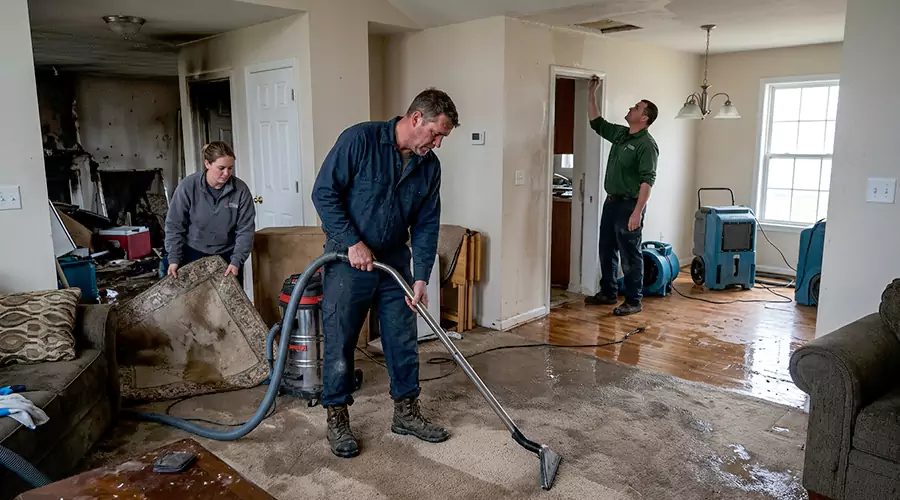
Firefighting water can damage a home by soaking drywall, insulation, flooring, framing, and electrical areas even when those materials were never touched by flames. Water used to control a fire can travel through ceilings and wall cavities. Drying should begin as soon as the property is safe because wet materials can support mold growth within about 24 to 48 hours. Professional fire and water restoration can help address moisture damage and prevent further problems.
Fire suppression can save the structure while creating a second type of property damage. The affected area may extend below the fire room because water follows gravity and moves through gaps around pipes or floor assemblies.
How Does Firefighting Water Spread Through a House?
Firefighting water can move much farther than the visible burn area because it flows through openings in floors and walls. Water can also soak porous materials that continue holding moisture after puddles are removed. For example, water applied to a second-floor bedroom may reach the ceiling below. It can then spread through insulation before appearing as a stain in another room.
Common paths include:
- Floor openings
- Wall cavities
- Ceiling penetrations
- Stairwells
- HVAC openings
- Gaps around plumbing
Water fire damage restoration often covers rooms that have little or no direct flame damage.
What Materials Can Firefighting Water Damage?
Porous materials absorb water quickly and can stay wet after exposed surfaces appear dry. Drywall can soften while insulation may trap water against framing. Wood flooring can swell as moisture moves through board joints.
| Material | Possible Water Damage |
|---|---|
| Drywall | Softness or sagging |
| Insulation | Saturation and reduced performance |
| Hardwood | Cupping or swelling |
| Carpet | Wet backing and padding |
| Cabinets | Swollen panels |
| Wood framing | Elevated moisture |
| Ceilings | Staining or sagging |
Fire damage and restoration decisions should consider water exposure separately from visible burn damage.
Why Is Wet Drywall a Problem After a Fire?
Wet drywall can lose strength as the gypsum core absorbs water. Ceiling drywall deserves extra attention because saturation adds weight while the panel is already supported overhead.
Signs of damaged drywall include:
- Soft areas near the floor
- Swollen seams
- Peeling paper
- Bubbling paint
- Sagging ceiling sections
- Expanding water stains
- Persistent dampness
- Musty odor
Drywall exposed to clean firefighting water may sometimes dry successfully when saturation is limited. Panels that become soft or badly deformed are stronger replacement candidates.
How Does Firefighting Water Affect Hardwood Floors?
Wood flooring absorbs moisture and expands. The boards may develop cupping when their undersides hold more moisture than their upper surfaces. Severe exposure can cause buckling when the flooring separates from the subfloor. Do not sand wet hardwood immediately after a fire. The wood should first reach stable moisture conditions because its shape can change during drying. Water and fire damage restoration may therefore continue for several days before anyone decides which floorboards can remain.
Can Firefighting Water Cause Mold?
Yes. Mold can develop when wet building materials remain damp long enough. Fire-damaged homes can be especially difficult to dry because water may be hidden behind finishes or beneath debris. The first 24 to 48 hours matter most for moisture control.
Materials that deserve close attention include:
- Wall insulation
- Carpet padding
- Subflooring
- Lower drywall
- Ceiling cavities
- Upholstered materials
Mold growth does not mean every wet item must automatically be discarded. The decision depends on contamination and whether the material can be fully dried.
How Does Water Mix With Smoke and Soot Damage?
Water can make smoke residue harder to clean by carrying soot across surfaces or deeper into porous materials. Dry soot that might otherwise vacuum away can turn into dark streaks after it becomes wet. This combination can create both moisture damage and smoke contamination in the same material.
Fire and smoke damage repair may become more involved when:
- Soot enters wet carpet.
- Smoke residue reaches saturated drywall.
- Wet insulation absorbs odor.
- Cabinet surfaces collect oily residue.
Drying and source cleaning should therefore be coordinated rather than treated as unrelated tasks.
Can Electrical Systems Be Damaged?
Yes. Water can affect outlets or wiring even when those components appear normal afterward. Electrical equipment exposed to firefighting water should not be operated simply because the surrounding room has dried.
Warning signs include:
- Wet outlets
- Water inside electrical panels
- Damaged appliance cords
- Soot around switches
- Melted electrical covers
- Water dripping near fixtures
Never enter standing water to reach a breaker panel.
How Long Can Firefighting Water Take to Dry?
Minor moisture may dry within a few days while saturated building assemblies can take a week or longer. Drying time depends on how deeply the water traveled and which materials absorbed it.
| Condition | Typical Drying Range |
|---|---|
| Light surface moisture | 1 to 3 days |
| Wet carpet or drywall | 2 to 5 days |
| Multiple saturated materials | 3 to 7 days |
| Dense wood assemblies | 5 to 7+ days |
Drying equipment should not be removed just because exposed surfaces feel dry.
What Can You Safely Check Yourself?
A moisture comparison can help show whether an accessible material is drying. Use a moisture meter suited to the material and compare the affected area with a similar dry location.
Follow these steps:
- Record a dry reference reading.
- Test the affected material.
- Mark the testing point.
- Repeat the measurement the next day.
- Look for a steady decline.
Avoid opening damaged walls simply to search for moisture because electrical wiring may be concealed inside.
When Should You Call a Professional?
Professional assessment is appropriate when firefighting water reaches several rooms or structural cavities. Electrical exposure also makes DIY work unsafe.
Consider professional help when:
- Ceilings are sagging.
- Several walls remain wet.
- Electrical components were exposed.
- Hardwood is buckling.
- Insulation is saturated.
- Mold becomes visible.
- Moisture readings stop improving.
- Structural materials were burned.
Fire damage restoration can involve both drying and smoke cleanup before reconstruction begins.
How Can Secondary Water Damage Be Limited?
Secondary damage can be reduced by removing standing water quickly after the property is cleared for entry. Wet belongings should be moved away from dry materials when it is safe to do so.
Useful actions include:
- Remove standing water promptly.
- Separate wet belongings.
- Start controlled drying.
- Track moisture daily.
- Keep clean areas isolated.
- Do not cover damp walls.
Conclusion
Firefighting water can affect far more of a home than the room where flames occurred. It can soak drywall or flooring while also reaching hidden wall cavities. Fast extraction and controlled drying reduce secondary damage. Moisture should be checked before repairs cover affected materials. If electrical systems or large structural areas became wet, professional assessment can help define the safe drying scope.
Frequently Asked Questions
Can firefighting water ruin drywall?
Yes. Heavy saturation can soften drywall or cause sagging. Limited exposure may sometimes dry successfully when the panel stays firm.
Can hardwood survive firefighting water?
Sometimes. Hardwood may recover after careful drying if the boards remain stable and the subfloor is not severely damaged.
Does firefighting water always cause mold?
No. Mold risk rises when materials remain damp for too long. Fast drying can greatly reduce that risk.
Can water damage occur below the fire room?
Yes. Water can move through floor assemblies and appear in ceilings on lower levels.
Should wet insulation be removed?
It depends on the material and contamination. Saturated insulation that cannot dry properly may require removal.
Can reconstruction start while materials are still damp?
No. New finishes should not cover building materials that still contain excess moisture.